


Warehouses
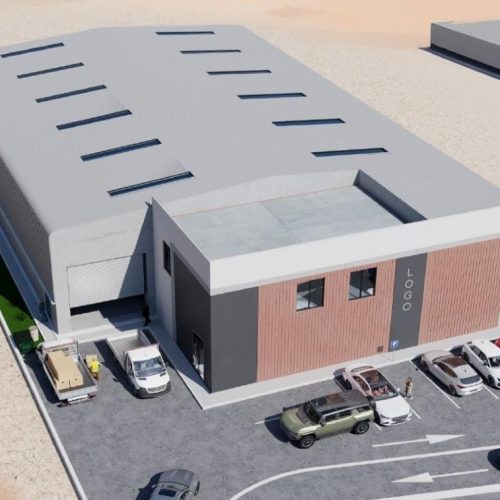
Warehouses in the UAE: Investment Yields and Promising Districts in Dubai and Abu Dhabi
Dubai serves as the primary commercial powerhouse of the Middle East, capitalizing on its central geographic position. Investors are actively leveraging this advantage by allocating capital into industrial and logistics real estate.
While regional investors traditionally chose between residential units, villas, office spaces, and retail assets, 2026 has seen a structural pivot toward warehousing and logistics infrastructure.
The core catalyst is clear: demand for high-spec logistics space across Dubai and Abu Dhabi continues to outstrip available supply. International enterprises are expanding their regional footprints, e-commerce adoption is surging, population growth remains steady, and major port and airport expansions are in full motion. Sorting, storing, and distributing goods requires an expanding network of modern facilities that cannot be built overnight.
According to current market intelligence, average occupancy for Grade A warehouses in the UAE has hit 95%. Rental rates have posted robust year-on-year growth—up nearly 18% in Dubai and 13% in Abu Dhabi—leaving premium, turnkey facilities in critically short supply across key industrial zones.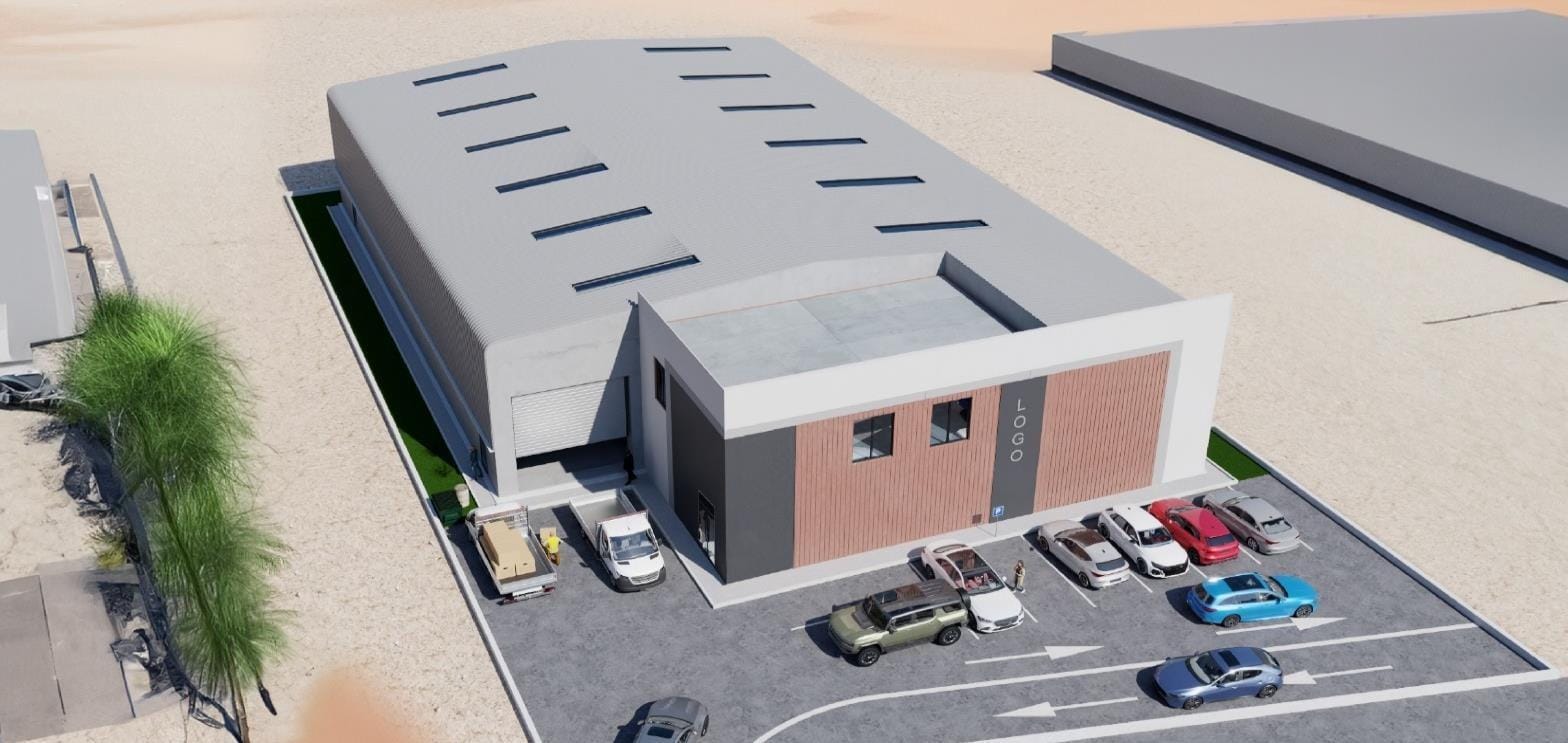
—
Key Drivers of the UAE Logistics Real Estate Market
The UAE continues to strengthen its role as a global trade and logistics gateway. Major freight corridors bridging Asia, Europe, Africa, and the broader Middle East converge in the country. This network is anchored by Jebel Ali Port in Dubai, Khalifa Port in Abu Dhabi, international aviation hubs, and the Etihad Rail network.
Etihad Rail acts as a major catalyst for industrial property. By directly connecting sea ports, industrial clusters, and inland trade centers, it streamlines freight logistics across the emirates. Plots and facilities positioned near rail and port infrastructure are well-positioned for sustained capital appreciation.
A second major force is the expansion of e-commerce. Industry leaders such as Amazon require large regional fulfillment centers on urban peripheries as well as compact last-mile facilities adjacent to densely populated residential areas. The growing populations of Dubai and Abu Dhabi drive continuous demand across every tier of this infrastructure.
A third key catalyst is the growing influx of institutional capital and global tech players. Leading international private equity firms and regional investment funds have recently established joint platforms targeting up to $5 billion in GCC logistics assets. At the same time, major global e-commerce operators are partnering with local airport free zones to build massive distribution hubs exceeding 70,000 sq m.
—
Warehouses in Dubai: Key Districts for Investors
Dubai remains the most established logistics market in the UAE, housing the region’s largest seaport, international airports, free economic zones, and major regional distribution hubs.
“We have received enquiries from companies relocating from a wide range of countries and representing very different industries. These have included a hydroponic farming and flower-growing business from Russia, as well as companies from Italy specializing in precision metal manufacturing and in refrigerants and specialty gases. This diversity of enquiries shows that Dubai is attracting businesses with very different operational and warehousing requirements”, notes Olha Novikova, broker at Al Hayat Almushreqa agency.
Al Quoz
Al Quoz is one of the few established industrial zones embedded directly within Dubai’s urban center. Its location makes it ideal for servicing central commercial districts and managing last-mile deliveries. Consequently, mid-to-small units in Al Quoz are in high demand among online retailers, service providers, traditional merchants, and dark-store operators.
Advantage: Direct proximity to the end consumer.
Disadvantages: Elevated lease rates and a limited supply of modern Grade A facilities. Older legacy stock and modern assets featuring wide access routes, high electrical capacity, and optimal ceiling clearances command significantly different liquidity and rental values, even on adjacent streets.
Jebel Ali and JAFZA
Jebel Ali Free Zone (JAFZA), centered around Jebel Ali Port, remains a foundational logistics hub for the Middle East. It primarily serves corporations managing bulk freight, import, export, and re-export activities.
Additional growth potential stems from direct cargo rail connectivity and proximity to Dubai South and Al Maktoum International Airport. However, land allocations are tightly regulated and released in phases, preventing speculative overbuilding despite high market demand.
National Industries Park (NIP)
Situated adjacent to Jebel Ali and Dubai South, National Industries Park (NIP) hosts significant industrial and manufacturing operations. New logistics stock is actively developing here, including a 1.55 million sq ft logistics park executed jointly by Aldar and DP World.
For investors, NIP offers a balanced combination of industrial demand, port access, and long-term upside connected to the expansion of southern Dubai. Thorough due diligence is required regarding assignment terms, subleasing regulations, and permitted business activities.
Dubai Industrial City and Dubai South
Dubai Industrial City (DIC) caters heavily to manufacturing entities, particularly in food processing and FMCG. Population growth fuels steady demand for local production, food packaging, cold storage, and processing space. The area benefits from direct access to Dubai South, Al Maktoum International Airport, and major highway arteries.
Unlike Al Quoz, which focuses on rapid inner-city delivery, DIC and Dubai South cater to large-scale production and regional distribution. Critical evaluation factors here include available power capacity (kW), land zoning, heavy vehicle access, and built-to-suit (BTS) development options.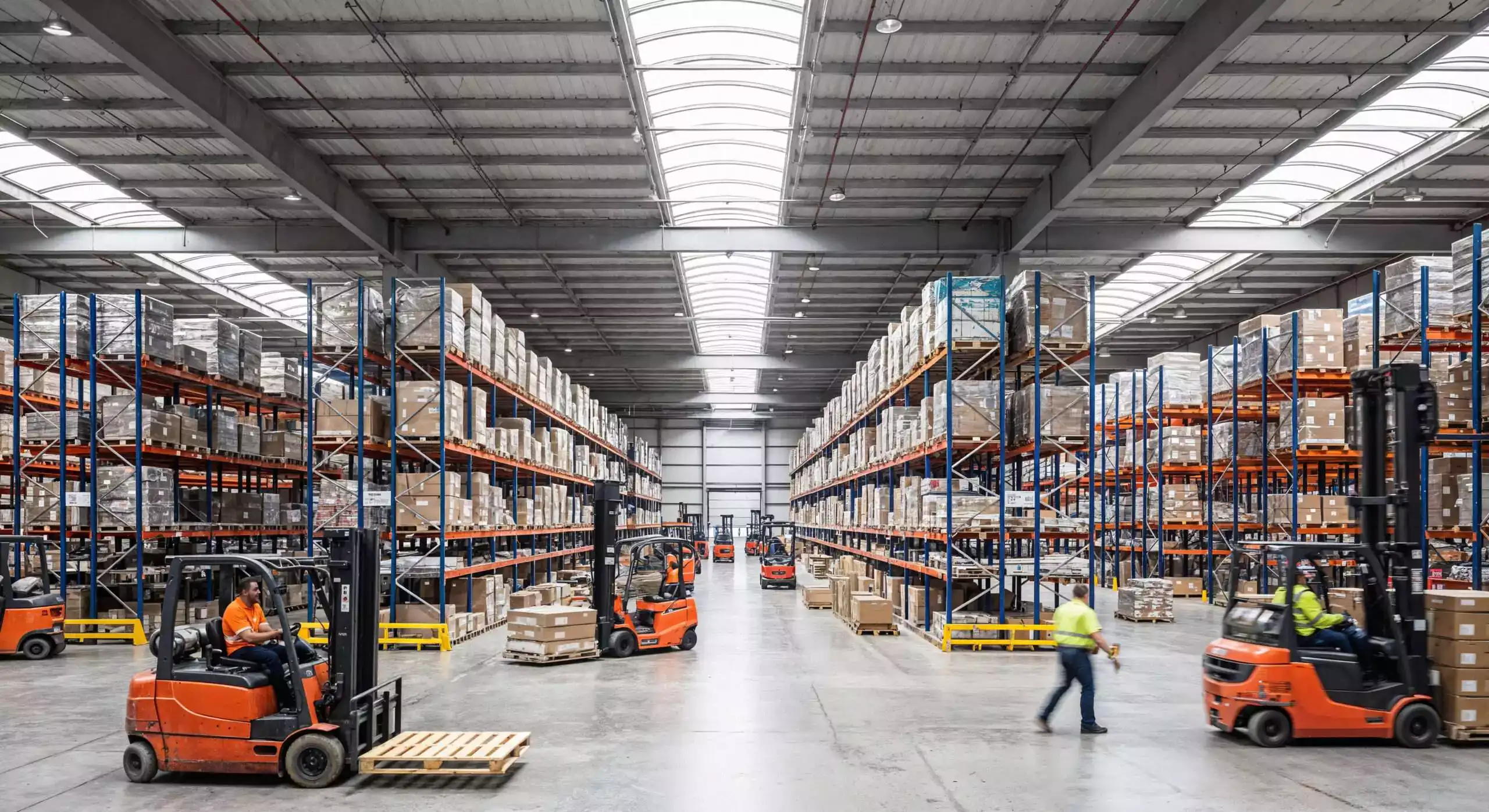
—
Warehouses in Abu Dhabi: Why Investors Are Focused on KEZAD
Abu Dhabi’s industrial market is tightly aligned with state-level industrial programs. The main focal point for market growth in the emirate is KEZAD (Khalifa Economic Zones Abu Dhabi).
KEZAD is strategically positioned next to Khalifa Port and connected to major highways and Etihad Rail links. The zone focuses on manufacturing, international trade, and large-scale industrial projects. Occupancy in KEZAD reaching 98%, backed by strong leasing activity.
A defining feature of Abu Dhabi’s industrial framework is the availability of long-term land development rights. Select transactions in KEZAD are structured via Musataha agreements with terms up to 50 years. Lease tenures vary depending on the specific zone, plot allocation, intended usage, and master developer terms.
Musaffah
Musaffah performs a function similar to Al Quoz by providing industrial and logistical support to the urban core, commercial hubs, and construction sectors of Abu Dhabi. However, asset quality across Musaffah varies widely. Older properties may yield higher immediate gross returns but often fall short of modern Grade A standards in building specs, safety, and long-term liquidity.
Abu Dhabi Airports Free Zone (ADAFZ)
ADAFZ is seeing accelerated development due to its direct airside access. This makes it a strategic choice for time-sensitive e-commerce, pharmaceutical cold storage, high-value electronics, and express freight operations.
—
In-Demand Warehouse Formats
In Dubai, tenant demand is predominantly concentrated in mid-sized warehouse units. Researches shows that facilities between 10,000 and 50,000 sq ft represented over half of all new leasing inquiries in 2025. This format accommodates a broad range of businesses and offers higher liquidity than massive, specialized complexes.
A proven investment strategy involves developing a larger property designed to be modularly partitioned into smaller, self-contained units. This layout enables owners to lease to multiple tenants, minimize single-tenant vacancy risks, and diversify income across different business sectors.
However, modular division must be incorporated at the architectural design stage. Each individual unit requires separate loading access, dedicated utility meters, parking, fire safety systems, office quarters, and adequate heavy-vehicle maneuvering space. Retrospectively partitioning a completed building is often legally or technically impractical.
—
Projected Yields and Investment Returns
Completed Grade A warehouses generate approximately 8% gross per annum in rental yields.
Grade B assets yield around 9% gross per annum. The higher yield on Grade B property accounts for added risk factors: structural age, outdated MEP systems, narrower tenant appeal, and lower resale liquidity.
A “land acquisition plus construction” strategy (speculative development or built-to-suit) offers higher yield potential. With strategic site selection, strict CAPEX management, and clear tenant demand, project returns can reach 14–18% per annum. Capital exits can be realized by selling the stabilized, income-generating asset to private investors or institutional funds.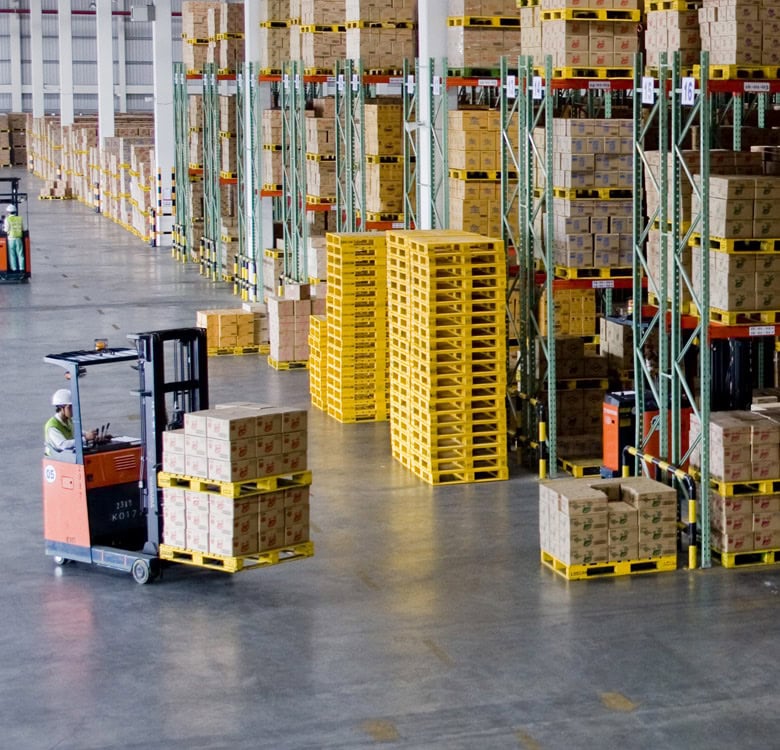
These figures vary based on specific project metrics. Net returns depend on ground lease costs, construction budgets, utility connection fees, financing terms, service charges, lease-up schedules, and rent escalation clauses. Returns should always be modeled on a deal-by-deal basis.
—
Ownership Structures: Freehold vs. Long-Term Leasehold
Most investment opportunities in prime industrial and free economic zones are structured under Leasehold or Musataha arrangements rather than traditional freehold ownership. The investor acquires a long-term legal right to use the land and own the built structure for the duration of the agreement.
Terms vary significantly by zone and jurisdiction. Contracts typically range from 25 to 50 years with extension options. Specific rules may govern property assignments, lease transfers, subleasing, and allowed business operations.
Key Due Diligence Checklist Before Acquisition:
1. Ground lease tenure, land rent terms, and fee structures.
2. Renewal mechanisms and land fee indexation terms.
3. Permitted trade activities and licensing compatibility.
4. Assignment, transfer, and subleasing rights.
5. Available electrical power capacity (kW) and utility readiness.
6. Civil Defense and fire safety compliance status.
7. Master developer / Free Zone service charges and maintenance fees.
8. Tenancy agreement terms, lock-in periods, and rent escalation formulas.
—
Strategic Summary for Investors
UAE logistics real estate has evolved beyond a niche market serving only industrial conglomerates and transport companies. Persistent supply shortages, growing trade flows, e-commerce expansion, and infrastructure developments make the sector increasingly attractive to private and institutional investors.
Selecting industrial property requires a fundamentally different approach than residential acquisitions. Views and lifestyle amenities do not apply; value is driven by transport links, technical specifications (clear heights, floor load capacity, electrical power), legal ownership structures, and how effectively the building solves the tenant’s operational needs.

Schedule a call for a free consultation