

Profitability of investments in real estate in Dubai

At a point in life, everyone faces the realization that keeping savings at home is both unsafe and very impractical. Some people use banking services, others trade on the stock exchange, and some look for profitable investment opportunities. Regardless, before deciding how to preserve and grow existing savings, it is important to evaluate the investment’s profitability.
Investments in real estate in Dubai
It is no secret that life in the UAE is often associated with wealth and success, making many foreigners choose Dubai specifically for real estate investment. This decision is connected to the favorable tax conditions, or specifically, the absence of property tax for owners of residential real estate. In addition to that, the developed infrastructure and high investment profitability are also what attract more investors. For Muslims, it is also important and reassuring to know that Sharia contracts are used when purchasing primary property directly from developers.
Looking back briefly, in 2002 a decree was issued allowing foreign nationals to own property in the UAE. This became the starting point of the construction boom in Dubai. A couple of years later, in 2007, another important law was introduced regarding the use of Escrow accounts, which became mandatory for developers to use in order to sell and register their projects.
Investing in real estate in Dubai provides high profitability mainly because of the absence of property tax.
This may sound unbelievable to those unfamiliar with the market, but Dubai truly lacks the tax burdens common in Europe or the Americas—such as personal income tax, capital gains tax, or mandatory social fund contributions. In some countries, these deductions can consume up to 60% of one’s earnings.
The UAE does have a Value Added Tax (VAT) of 5%, but it applies to goods and services and does not affect residential real estate or rental income. The only exception is hotel apartments, as they are classified as organized commercial activities.
As of today, Dubai remains a tax haven for individuals, freelancers, and businesses of all sizes. Imagine being able to focus 100% on scaling your business without wasting time on tax audits, complex filings, or calculating payroll deductions.
We hope this favorable environment continues indefinitely, as it remains Dubai’s key investment advantage on the global stage. You can learn more about the types of taxes and how they are calculated in our overview on this topic.
Therefore, it is no surprise that in 2021 alone, foreign investment in Dubai real estate reached $27 billion, and only by the first quarter of 2026, according to the Dubai Land Department (DLD), the volume of foreign investment reached approximately $40.4 billion, confirming the sustained interest of international investors in the emirate’s market.
Why exactly Dubai?
Dubai is considered one of the most attractive emirates for investment. It is often referred to as a leader in the Middle East when it comes to investment opportunities. However, it is important to look in more detail at whether purchasing real estate in Dubai is actually profitable.
Dubai offers a wide range of opportunities in the residential real estate sector. This includes both ready properties and projects that are under construction. The legislation and laws in Dubai provide clear regulations for real estate investments and protect the interests and security of investors.
Profitability as a concept
The concept of profitability comes from the relationship between profit and expenses in a particular type of commercial activity. An effective business or successful investment has high profitability, meaning it generates enough profit to cover expenses, including the purchase of shares and maintenance of an asset, while also providing additional income beyond the initial costs.
One of the biggest indicators of profitability is ROI (Return on Investment). In real estate, ROI refers to the profit that is made from the purchase of a property after deducting all the investment-related expenses. These investments include the initial purchase price plus all costs associated with maintaining the property. In order to calculate the ROI of a specific property, that property must eventually be sold. However, when calculating potential returns, statistical data related to real estate from previous years can also be used.
The following formula is often used to calculate the ROI of a property: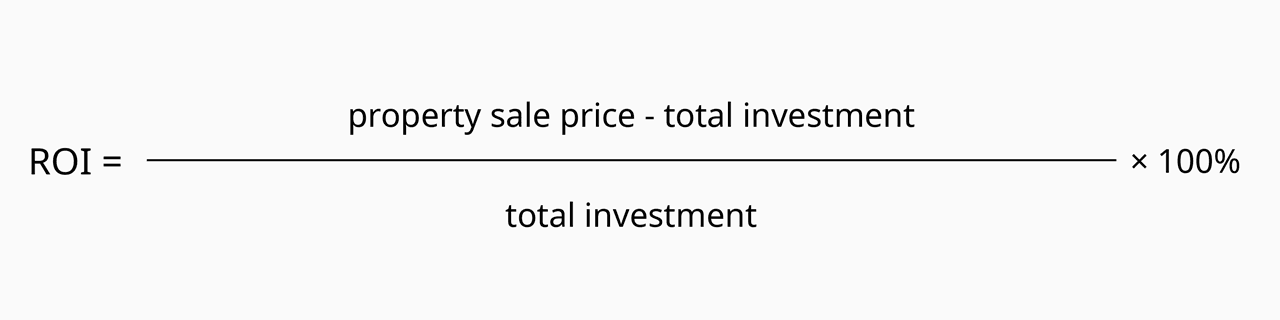
Let’s look at a real-world example based on off-plan property purchased in the Madinat Jumeirah Living project at the launch price from the developer Meraas for AED 2.1 million. After a year and a half, the owner sold the unit—while it was still under construction—for AED 3 million. Thus, the ROI = (AED 3 million — AED 2.1 million) / AED 2.1 million * 100% = 42%. Of course, this is a simplified calculation, as the sale was conducted through an agency, meaning the seller also paid a 2% brokerage commission and incurred minor fees (such as obtaining an NOC certificate). However, even taking these small expenses into account, you must agree that Dubai offers truly impressive returns for investors who select the right projects.
Let’s consider the potential costs of maintaining completed property:
- Service charge (an annual payment that is paid to the management company that is responsible for maintaining a building or a whole community, after the property is put into operation);
- Current or major repairs;
- Furnishing;
- Cleaning;
- Utility payments (which have to be paid regardless of whether someone is living in the property or not, usually there is a minimum payment for electricity, water, and air conditioning);
- Loan payments (if the property was purchased through a mortgage);
- Other expenses.
The listed expenses are not universal or match every case. However, when evaluating potential profit, it is important to consider which of these expenses may arise.
The profitability of a specific property depends on the purpose for which the property is being used. Naturally, purchasing and using a property for rental purposes is a far more profitable investment than buying a property that will remain unused.
For those who are interested in purchasing property in Dubai to use for rental purposes, the profitability of investments can reach 8-10% yearly. Some highly liquid properties can generate returns of up to 20% yearly. This amount of returns is significantly higher than in other major cities such as London, Paris, and Tokyo.
To determine the profitability of investing in real estate in Dubai, it is important to calculate the potential income, as well as estimate the expenses that are associated with maintaining the property. Expenses related to maintaining rental property include:
- Insurance (optional);
- Service Charge;
- Payment for utilities (especially relevant for short-term properties such as holiday homes);
- Commission paid to the management company that is responsible for renting out the property;
- Possible repairs;
- Purchase of appliances, furniture, and any interior items;
- Other expenses.
To calculate the ROI (Return on Investment) for a rental property, we use the following formula: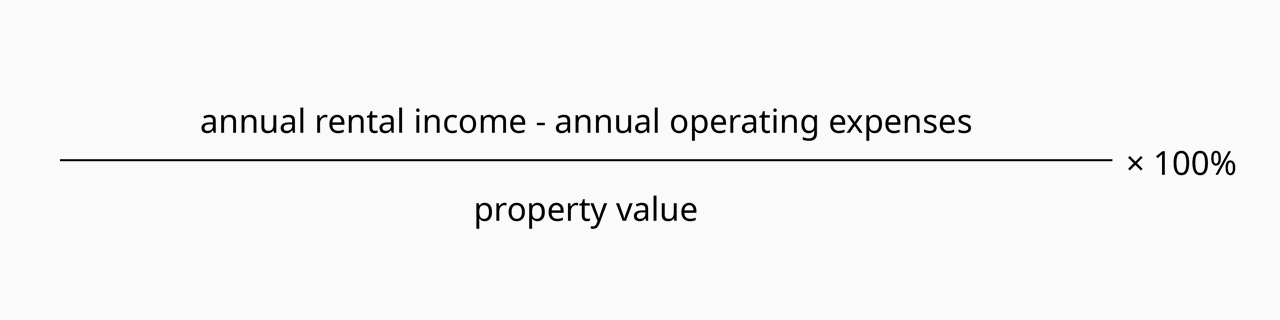
Let’s look at a real-world example based on a studio apartment in the Park View Tower project located in Jumeirah Village Circle (JVC). The owner purchased a furnished studio for AED 530,000 directly from the developer in a cash transaction. The tenant currently renting this unit pays a monthly rent of AED 6,500 (which includes utility bills totaling approximately AED 1,000 per month). We also factor in the annual service charge of approximately AED 7,065 paid by the owner. Thus, the formula in practice is as follows: Net ROI = ((AED 6,500 * 12 months) — (AED 1,000 * 12 months + AED 7,065)) / AED 530,000 * 100% = (78,000 — 19,065) / 530,000 * 100% = 11% Net ROI. This level of return is considered very healthy in Dubai. In the city’s prime tourist districts, owners can even achieve up to a 20% ROI through expert property management.
In addition to long-term leasing, short-term rentals—as described in the example above—are highly popular in Dubai. A vast number of tourists arrive almost continuously, seeking to spend a weekend, five days, or a week enjoying everything from luxury villas to more modest, affordable apartments. To reiterate, there are two main types of rentals in Dubai: long-term (with an annual contract registered in the Ejari system) and short-term (which usually refers to monthly or daily rentals). Short-term stays are often classified under the Holiday Homes category, focusing specifically on weekly and daily rates. People visit Dubai with a wide variety of goals and intentions, so each target audience requires a tailored approach and different types of offerings.
Profitability of investments in real estate in Dubai
Dubai is not only one of the world’s most popular tourist and resort destinations, but also a city where millions of people dream of living. Because of this, demand is strong across different types of properties, ranging from studio apartments to mid-range houses and ending with luxury villas. Location also plays an important role, but demand is not limited only to beachfront areas. Properties that are located in more distant parts of the city are also in high demand. For example, Dubai Studio City is an area that has shown a record of 10.9% return on investment for studio apartments. Studio apartments are also very popular in locations like Al Warsan, The Greens, Barsha Heights, and International City. There are a lot of different market infographics and statistics that help investors identify which property categories are the most liquid and profitable. However, to make the most effective investment decision, it is highly recommended to get help from an experienced real estate agent.
Demand for real estate in Dubai continues to increase. Over the past year alone, the purchase of apartments, villas, and office spaces grew by approximately 1.5-2.5 times. This stable growth in demand confirms that real estate in Dubai remains a profitable and promising investment opportunity. In addition, property investors can qualify for residency in Dubai through the investor program. To qualify for an investor visa in 2026, the Dubai Land Department (DLD) has introduced even more flexible conditions than those previously in place. There is no longer a minimum price threshold for applying for a 2-year investor visa (previously, the requirement was AED 750,000 that is equal to $204,000); however, certain other requirements apply, such as the property being completed (construction must be finished). There are also specific nuances regarding joint ownership between legal spouses. For the 10-year Golden Visa, the property may be off-plan (under construction), but its value must start from AED 2 million ($545,000). Alternatively, an investor may own any number of properties, provided their total combined value for the Golden Visa application is at least AED 2 million.
It is also important to note that both residential and commercial properties can qualify for a Golden investor visa.
How to increase the profitability of real estate
When renting out apartments on a long-term basis, investors can expect an annual return of around 7-8%, while in some areas the return can reach 10-12%. For villas, the average return is usually around 5-6%. Although real estate in Dubai already offers high returns, naturally, investors always look for ways to further maximize their profits.
There are two main ways to increase profitability:
- Increasing the property’s market value;
- Reducing expenses and operating costs
Increasing the market value of a property can help increase the profits, but it often requires proper justification for potential tenants or buyers and has additional costs. This may include advertising costs, improvements, or upgrades to the property. In some cases, profitability can increase naturally because of the property’s location. Properties that are located near water, the first coastline, or in a desirable area of the city can bring investors returns of 200-300%.
Another option is reducing costs, although it requires careful attention to detail, it is often considered the more effective method. For rental properties, investors can work with management companies that charge lower commission fees, reduce maintenance expenses, or optimize operational costs. For example, instead of replacing bedding every six months, it can be replaced once a year, while unnecessary small amenities such as disposable shampoo or slippers can be minimized. It is also possible to lower expenses by hiring more affordable repair specialists when maintenance is required. A good strategy for reducing costs is purchasing property at a lower price or choosing a longer payment plan. A lower purchase price combined with increasing rental rates will naturally result in more profit. At the same time, to avoid any potential unpleasant situations involving fraud or illiquid property, it is advised to work with professional real estate agents.
When choosing to buy real estate in Dubai it is important to pay attention to a few factors:
- The location of the property (beachfront, city center, or residential area, since different areas attract different markets of buyers and tenants);
- How close the property is to transportation, shops, and other infrastructure;
- The cost and quality of property maintenance;
- Mortgage interest rates and overall market conditions at the time of purchase.
Investments in Dubai are considered highly secure, as it is one of the safest cities in the world with laws and legislation that carefully regulate and protect investments. In addition, Dubai inspires trust not only as a city but also as a strong and stable economy. This is one of the key reasons why many investors choose to invest in the Dubai real estate market. However, to ensure the security of assets, it is highly recommended to handle all transactions through a professional real estate agency.
Other news